The Declaration of Independence has long been hailed as a major turning point for the United States of America, and without a doubt it is, when the US became independent it was a sign to countries all over the world that it was possible to overthrow the European superpowers who were unfairly colonizing countries around the world. Yet, the major misconception is the idea that independence caused a real shift in the liberties present in America. Sure, the richest landowners controlled the country, yet women, enslaved people, and the middle and lower classes still faced an uphill struggle towards equality. Ever since America became independent it has been divided. Now it is as divided as it has ever been, and the class tensions that caused political divisions in the first place have turned into a culture war that is consuming the political sphere of America. American political division has evolved from class and regional conflicts, to a moral and economic clash over slavery, to the partisan realignment of the 20th century, and finally to the modern era of cultural polarization and fragmented media ecosystems.
The first major feud in the American political sphere was between the Federalist and Anti-Federalist parties. Following the original Constitution, there was a massive political conflict over how to balance out state and federal power. The Federalist party, backed by the elites, was convinced that by giving the central government control, America would be much more secure and stable, while the Anti-Federalist party wanted to balance the scales and hand power to the individual states. They feared a repeat of the abusive government system that was implemented by the British, and wanted to protect themselves against tyranny. This distrust of federal power is something that has endured throughout the history of America, and it seems there is a constant fear of federal power being abused. Eventually, the Federalist party got what it wanted, and the constitution was ratified, but this argument over what level of authority the government should hold would end up consuming the United States for years to come, and it is the key divider between the modern day Democratic and Republican parties.
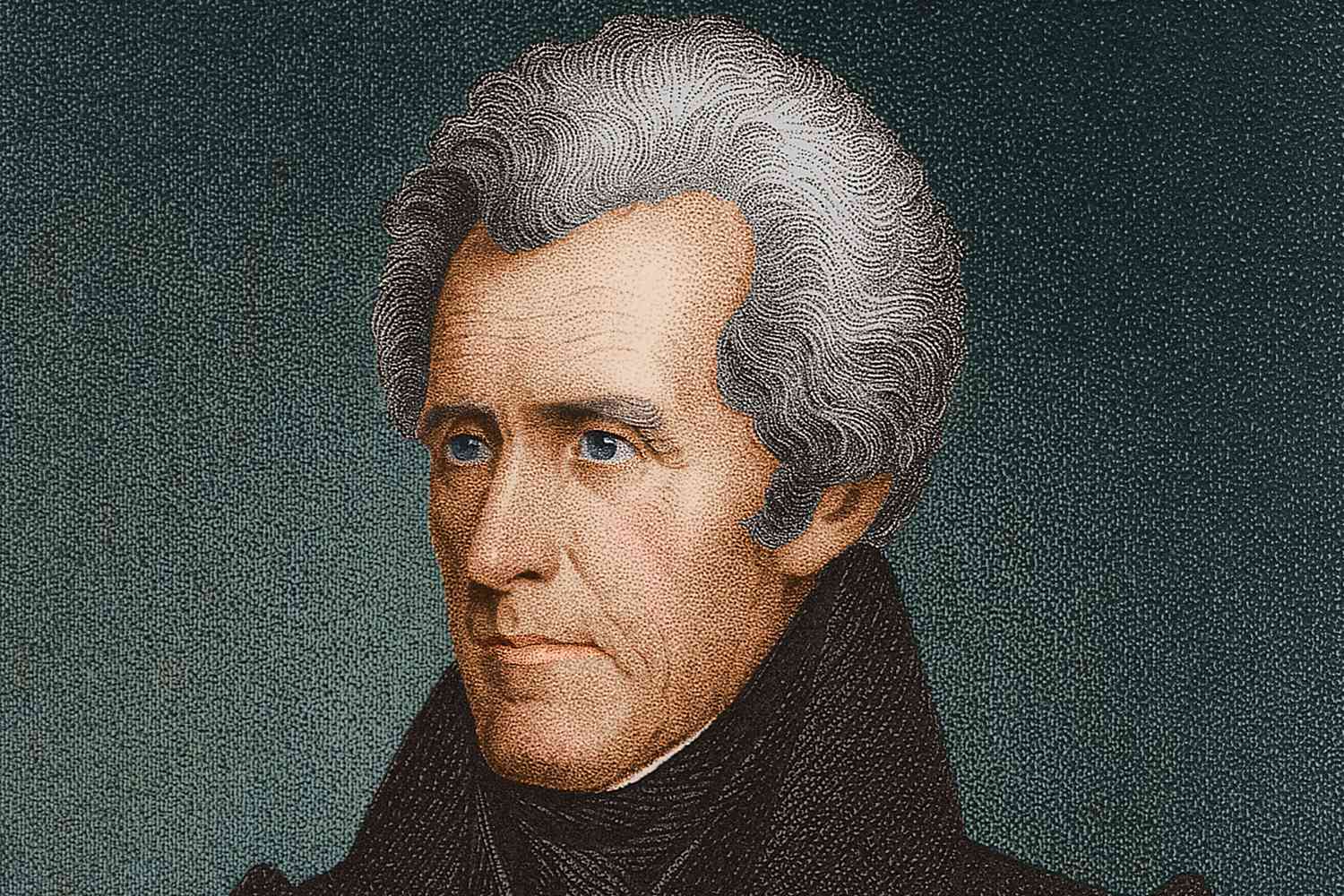
In the 1800s, the conflict between the so-called “common man” and elites defined politics. Throughout history, there has been a longstanding sentiment among the lower classes that they need politicians who are relatable to represent them. Something that has continually lost democratic support in modern day politics is the fact that many Americans feel Democrats are “talking down” on them. This cultural mindset is part of what has created polarization, and in the 1800s Andrew Jackson was able to win the presidency over John Quincy Adams by appealing to the lower classes of America. Jackson was a renowned war hero, and Americans looked at him as somebody who could represent their interests with pride, and who understood what they were going through. So, for many voters actual policy didn’t matter as much as the character of the person they were voting for. On the other side of the 1828 election, John Quincy Adams was aiming to retain his presidency. He had been tailored from youth to be a politician. Growing up in an elitist family, Adams was not able to replicate the compassion that drew so many to Andrew Jackson. So while he might have had brilliant ideas, for voters that didn’t matter. The election of Jackson showed the power of American democracy. They were able to topple the elites, and bring back power to the so called common man. However, Jackson made many mistakes as a president and he brought in an economic depression while persecuting much of the Native American population. Yet, just by winning the election, it illustrated the divide between the elites and the lower class. This was one of the first elections where the theme emerged of voters prioritizing the character of a candidate over actual policy, and this theme has continued to emerge over time, most notably in Donald Trump’s 2016 and 2024 election wins.
But what really etched a line down the middle of America was the conflict of slavery that plagued America during the 19th and 20th century. As the Market revolution emerged, the gap in lifestyle between the north and south widened. The north was quickly becoming almost completely emancipated, and with the introduction of factories, urbanization was taking over. Meanwhile in the south, the economy revolved around the production of cotton, and slaves were crucial to the southern economy. Due to this discrepancy on the level of reliance on slaves, the south were heavy critics on the idea of emancipation. The north now represented ideas of equality and modern reforms, while the south was enamored in the idea of maintaining the traditional society of America which was agrarian and had a strict hierarchy. The south also wanted more individual state power, while those in the north encouraged a strong federal government. While change was welcomed in the north, the south was more than skeptical.
These tensions compounded until the eventual Civil War. This war marked the culmination of a string of major ideological conflicts representing just how many things couldn’t be agreed on. When Abraham Lincoln was elected as the first ever Republican president of America in 1860, he pledged to end slavery. Soon enough, in 1861 seven states created the Confederate States of America and broke off. Eventually after a five year war, and a reconstruction, by 1880 compromises were made and a semi unified America was created, but the geographical and ideological divides created by the Civil War are ones that are very much present today. The civil war made the south distrust the federal government of America, and that mindset has lasted into modern day politics in which the south typically votes for lessened government power.
Through the early 1900s, while perhaps slavery was abolished, the racist ideals of the south endured, and the Jim Crow era lasted deep into the 1960s, in which racial divisions became a legal structure. With the 1896 separate but equal supreme court decision, the south was able to legally segregate, yet while the south was attempting to maintain traditional American values, in the north, the continued influx of immigrants and industrial development led to a widening of the lifestyle divide between the north and south.
During this time period, a massive political realignment took place which created the political parties that define modern day politics. Up until this period, the Democrats had represented the south and pushed for less central power along with being a party that represented the working class, on the other side the republican party had represented the more liberal north, pushing for more government power, and industrialization to support large businesses and corporations. However, as America continued to modernize, democrats realized that no longer could a small government help the lower classes of America, now needed an expanded government to provide much needed support systems. On the other side, the republican began to change their policies towards more of a small government system because now in order to support capitalism and major businesses The Republican Party decided they needed a smaller government with less taxes for the rich. These changes came to fruition under the leadership of Franklin Roosevelt who was elected in 1932. As Franklin Roosevelt rose, he was able to capitalize on the 1929 Great Depression which had been caused by Republican Herbert Hoover. President Hoover was an elite who failed to economically support the lower and middle class of America. Roosevelt campaigned on ideas of increased government intervention, which would be able to provide economic stability for all of those who were struggling. His New Deal was the greatest expansion of government in the history of America.
Up until this point, the Republican party had been the party pushing for civil freedoms and emancipation, but as the 1900s went on, the Democratic Party began to embrace more anti-racist legislation, which led to an influx of black voters to their side. The Republicans recognized the many flustered southern voters who were uncomfortable with the social change in America, and implemented their Southern Strategy. They recognized the many white angry voters in the south, and under Ronald Reagean shifted to represent more traditional ideals along with campaigning on ideas of law and order. This was the final straw in redefining the Republican Party. During this time period, while the division in America remained, it is key to understand how the division changed, because it explains how the parties gained the support base they have today.
But the political scene of the late 1900s and the Cold War era is one that shows much more unity than that of modern day. The late 20th century was a time when political lines were less concrete and voters less sorted. American politics has experienced a new force: negative partisanship, where voters supported their party less because they loved it and more because they feared or despised the other side. Cultural issues such as gun control, gay rights, immigration, and religion became central identity markers, reinforced by the 24-hour news cycle and online political communities. As a result, the number of true swing voters has steadily declined. In the 1970s, roughly a quarter of voters regularly switched parties between elections, but by the 2010s this group had shrunk dramatically, with most voters locked into consistent partisan identities. This shift lowered the incentive for compromise and pushed politicians to cater to their most ideologically intense voters, laying the groundwork for the hardened politics of the 21st century.
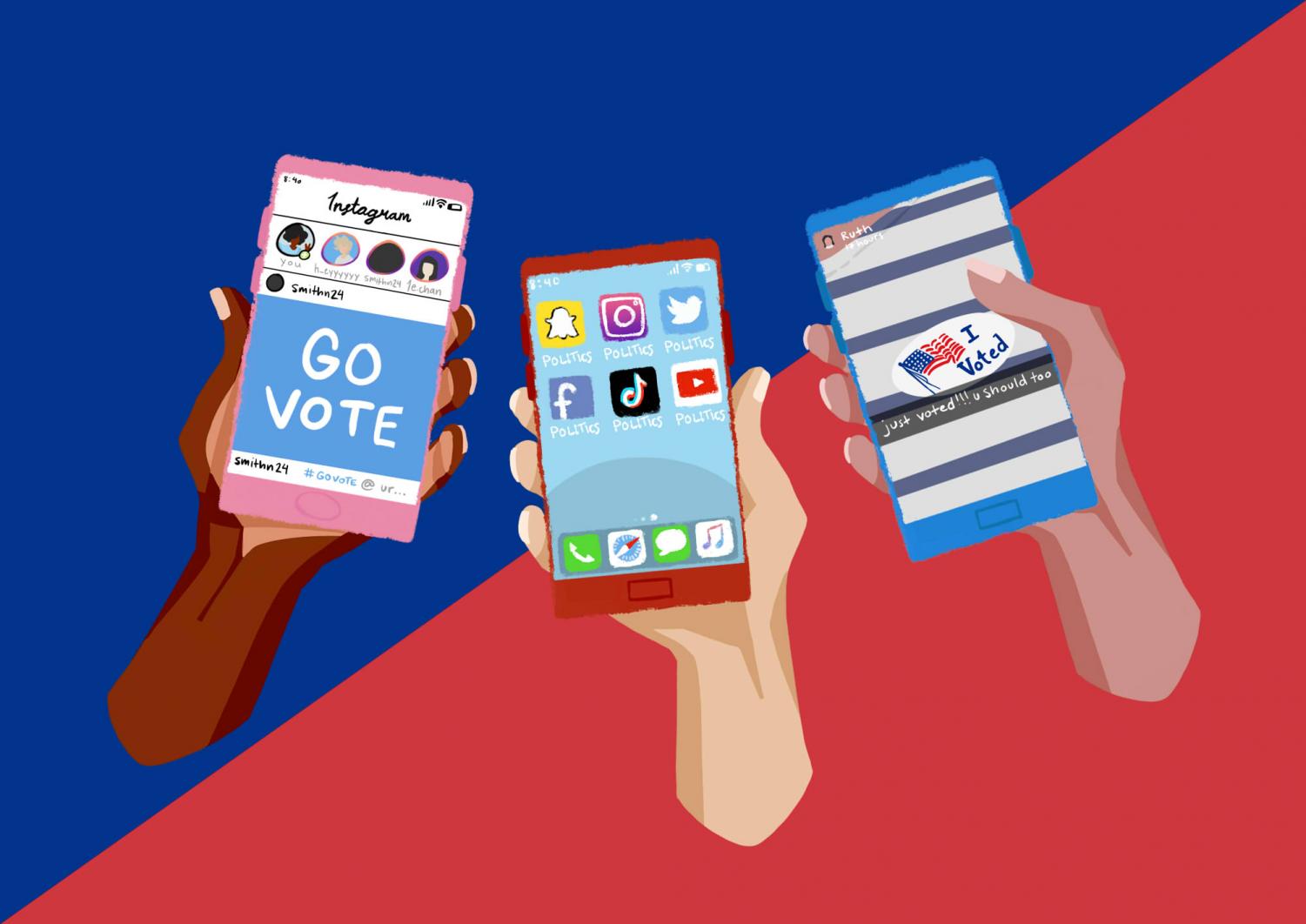
The rise of social media created information silos where Americans encountered entirely different news ecosystems, allowing misinformation to spread rapidly and partisan identities to radicalize more easily. Events such as the Tea Party movement, the Obama and Trump presidencies, and the widespread distrust of institutions accelerated the process, with each side increasingly viewing the other as an existential threat to American democracy. Congress became more gridlocked than at any point in the modern era, and elections became nationalized, with fewer competitive districts and fewer voters willing to cross party lines. Political scientists argue that this era represents a historically unprecedented level of polarization — not necessarily because the policies are more extreme, but because Americans are less willing than ever to assume good faith across party lines.It seems like as time has gone on, Americans have limited their content and news intake more and more. Now, people are only reading and watching what they want to watch, taking away the ability of voters to be exposed to a variety of viewpoints. This all stems from the introduction of social media and online news outlets. Starting in the early 2000s, social media began to take over the political sphere of the world. Now instead of reading a 15 minute article, people consumed news in 3 second spurts. The amount of news outlets available to people went up, and with that came a rise in misinformation along with news polarization. Instead of good high quality reporting being rewarded, what reaps in economic benefits now is headlines that draw attention and feedback. This is key to understanding the political division of America because it explains why so many voters are misinformed and unable to listen to their opponent.
What has also been fundamental in this growth of division is the controversies over the integrity of elections. In the 2010 Citizens United v. Federal Election Commission case the limits were taken off of corporate unions to spend on elections. What this has done is made politicians have to cater to the elite in order to gain access to funding and advertising which decide modern day elections in which campaigning is everything. Moreover, there have been multiple conflicts over issues such as gerrymandering and voter fraud.
The evolution of American political division is not the product of a single moment, but a long chain of structural, cultural, and demographic transformations stretching from the independence of America to the present day. The realignment of party coalitions, the racial and regional shifts of the 20th century, the rise of mass media, the erosion of swing voters, and the fragmentation of the information environment each hardened partisan identities layer by layer. Today’s political climate, defined by distrust and misinformation, is the cumulative result of these trends. Yet the same history also shows that American political coalitions have repeatedly changed before. Recognizing the forces that brought the country to this point is the first step in imagining how polarization might eventually ease. Through rebuilding shared civic spaces, reforming political incentives, and fostering engagement that rewards persuasion rather than division change is challenging but possible
 The New York Unity Project
Leave a comment