By Wendell Sweet
Executive Summary: Approximately 62% to 68% of state prisoners are rearrested within three years of release, indicating the failure of the prison system to produce effective rehabilitation. Upon release, inmates lack sufficient support from the government and struggle to survive economically. This is largely caused by a prison system that is set up to punish rather than rehabilitate. Over the last 50 years, American politicians have leaned into the “tough on crime” rhetoric, creating a toxic prison system which spends around 445 billion every year. Other countries – such as Norway (50% drop in recidivism) – have seen success in a progressive system that focuses on reform over punishment. A study by the National Bureau of Economic Research showed that for previously unemployed inmates, job training programs led to a +40 percentage point increase in employment after release. Evermore, prison education significantly reduces recidivism and boosts employment, with participants being up to 48% less likely to recommit crime and 13% more likely to find work. The first step towards creating success in the outside world is to stimulate it beforehand.
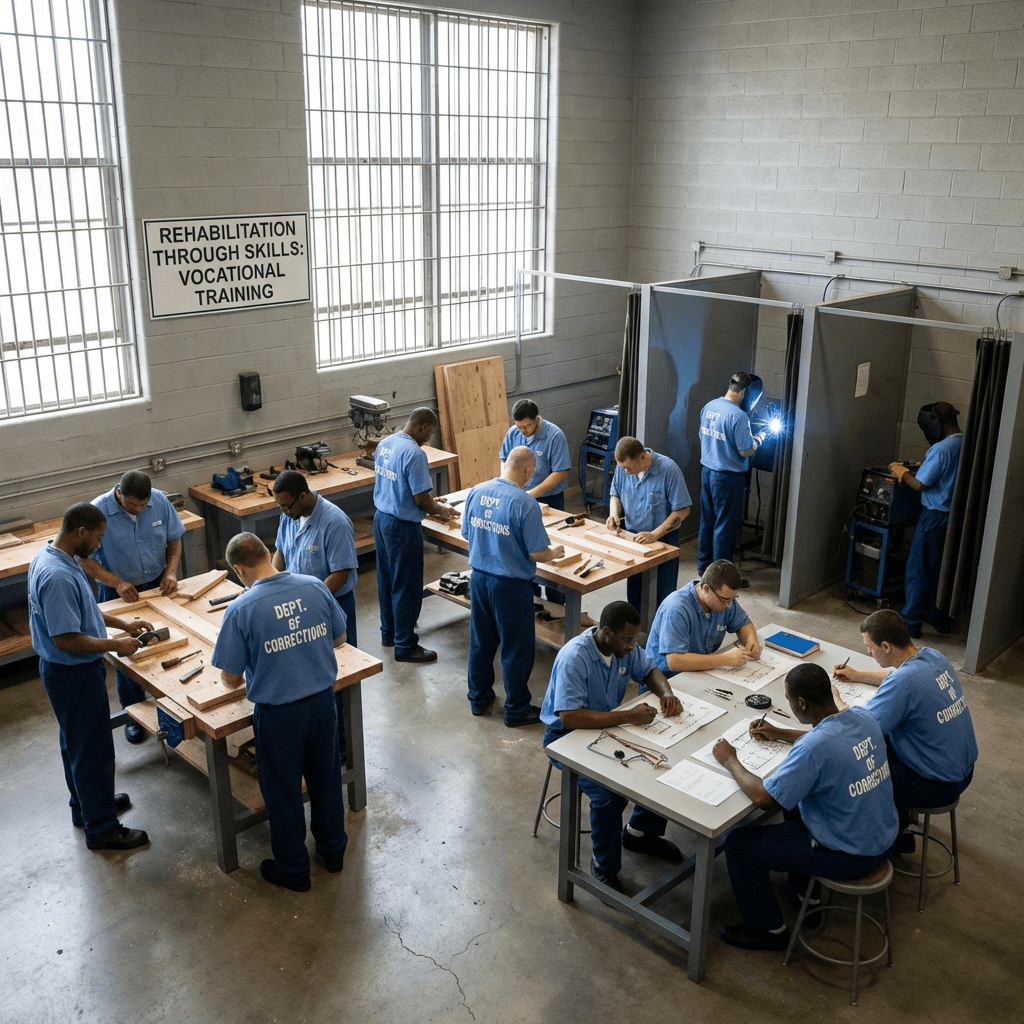
Policy suggestion: Mandatory Pre-Release Workforce & Education Track
- All inmates within 24–36 months of release are enrolled in:
- Vocational training (specialized education focused on teaching practical, hands-on skills required for specific trades, occupations, or careers) OR academic program
- While participation is mandatory, allow inmates to opt out of the program if they talk with a correctional officer and demonstrate equivalent post-release employment or education placement.
- Programs delivered via partnerships with:
- Community colleges
- Private employers
- Participants receive wages:
- Portion saved for reentry
- Portion allocated to restitution
- Expand public-private partnerships to create employment pathways for those in prison
- Create a Work Opportunity Tax Credit for employers who hire those in prison within the past 24 months
- Increase government outreach to small businesses and sectors struggling to find employment, and offer to customize job training practices in exchange for employment opportunities

Implementation Body:
- Federal Bureau of Prisons + state corrections
Target Population:
- Non-violent + medium-risk inmates
Risks:
- Political resistance from those who are “tough on crime” and see this as overly lenient
- Issues in equal implementation of education and employment opportunities among all prisoners
- Mistrust of employers in hiring those from prison
Cost and impact: From an economic standpoint, prisons provide substantial financial benefits, saving taxpayers 4 to 5 dollars for every 1 dollar invested in correctional education. An expansion of these programs would encompass around 250,000 inmates annually, with a cost of around 4,000 dollars per prisoner leading to a budget increase in the range of 1.1 billion dollars. However, this cost will be offset by a decrease in prison population. Assuming around a 20-25% decrease in re-incarceration, this would mean a deduction of about 35,000 new prisoners per year. Currently the government invests a median of 60,000 dollars per prisoner, so this would mean savings of over 2 billion dollars. Additional fiscal gains from increased employment and reduced system burden are not fully captured in this estimate, and this doesn’t quantify the mental benefit prisoners receive from educational stimulation – decreasing the 22 hours many inmates spend in their cells.
Conclusion: This will set an important precedent for prison reform legislation and will form the first step towards the expansion of the United States prison model towards one that prioritizes rehabilitation. While the United States of America may not be able to replicate the individual focus that is put into prisoners in more progressive systems, what can be done at scale is to implement education and job support programs. It is key to note that this is only the first step in reforms needed. There are an array of improvements that must be made ranging from prison quality to prison guard training.
 The New York Unity Project
Leave a comment