By Wendell Sweet
In my last article I wrote on how the Democratic Party can attract a higher white evangelical vote, and now I want to do the reverse and question how the Republican Party can attract more Protestant African American voters. If you haven’t read that article yet I encourage you too because it provides a very interesting contrast to this article (https://newyorkunityproject.com/2025/12/21/how-to-bridge-the-political-religious-gap/).
Before entering into this piece I want to preface by explaining the motives behind these opinion pieces. The New York Unity Project was founded behind the idea that America is so divided that many voters aren’t making the best voting decisions for themselves. Without even hearing the argument of a given political opponent, Americans tend to consistently support the candidate of their party, without questioning the policies they are voting for. To the same extent, religious groups and racial groups typically do a similar thing. This kind of infrangible block voting is a major contributor to the current political division in America. I am attempting to break into these major blocks of millions of voters. In an improved world, Americans are able to confidently vote on what will benefit them most, and so I am challenging some of the most long lasting political allegiances.
Maybe Democrats don’t want to attract white Evangelical voters, and maybe Republicans don’t want to persuade African American Protestant voters to convert to their side of the political spectrum. This stems from the Base Mobilization: when a political campaign doubles down on their support base rather than seeking to persuade swing voters or political opponents to their side. A famous example of this was in George Bush’s 2004 reelection campaign in which he noticed that 4 million Evangelical Christians had stayed home in the last election. He then leaned into the issues that appealed to this base, winding up winning the election by doubling down on an already existing support base. Yet I urge you to stick with me, because while strategically it might not be the most efficient to target a demographic that has historically never given your political party any support, if the U.S. truly wants to reduce political division, this is the exact sort of action that has to and should be made.
While less strong than White Evangelicals, there is still a strong pillar of conservative beliefs among African American Protestants and even more Evangelicals. Many oppose abortion and are conservative when it comes to sexuality and gender. So why is it that those conservative beliefs have brought White Evangelicals to the strong right, while African American Evangelicals have those same beliefs but are on the opposite left?
When talking about Christianity and government, there are two stances that can be taken from a strictly policy led perspective. The idea behind Democratic policy is that by expanding the government, more services can be provided for Americans, while Republicans aim to lower taxes and minimize the influence of the government. This is supposed to create a larger private market, and make it easier to gain upward social mobility, but the trade off is that there is a larger need for private establishments to do what government programs would have accomplished. But for African Americans, government programs have historically filled gaps that private institutions could not. While many White Protestants have faith in private institutions, many African American Protestants have lived through their failure and have strong reservations or distrust them.
When comparing these two ways of government, it seems like the Democratic idea of providing increased support for the lower class is one that would line up with Christian values. There is an emphasis in the Christian religion on helping others and forgiveness. This would aim towards Evangelical support of government programs that prop up the lower and middle class. But on the other hand, you can approach this conflict from a more concrete policy viewpoint. When you look at issues such as abortion, race and sexuality, the Republican Party is consistently more conservative. This is the key divider. As an Christian voter, you see some Republicans fighting back against pro-choice legislation, and you see them questioning gay marriages. What you don’t pick up on is tax cuts for the upper class, or the limitation of government services. Without digging deep, it seems like the conservative Republican model lines up with many Christian values.
I hope it is easy to envision the two sides of the Protestant spectrum. You have the side driven towards the classic American values: the voters who love the law and order of appeal of the Republican Party and aren’t able to accept liberal perspectives on issues such as abortion. Then on the other side you have the sect that embraces equality and inclusion; the side that looks positively on the expansion of government services. So why is it that the divide between these sides is so heavily driven towards race? The vast majority of African American Protestants identify with or lean toward the Democratic Party, with recent data showing around 84% align Democratic, while White Protestants lean heavily Republican, with White Evangelical Protestants overwhelmingly supporting the GOP (around 80-85%).
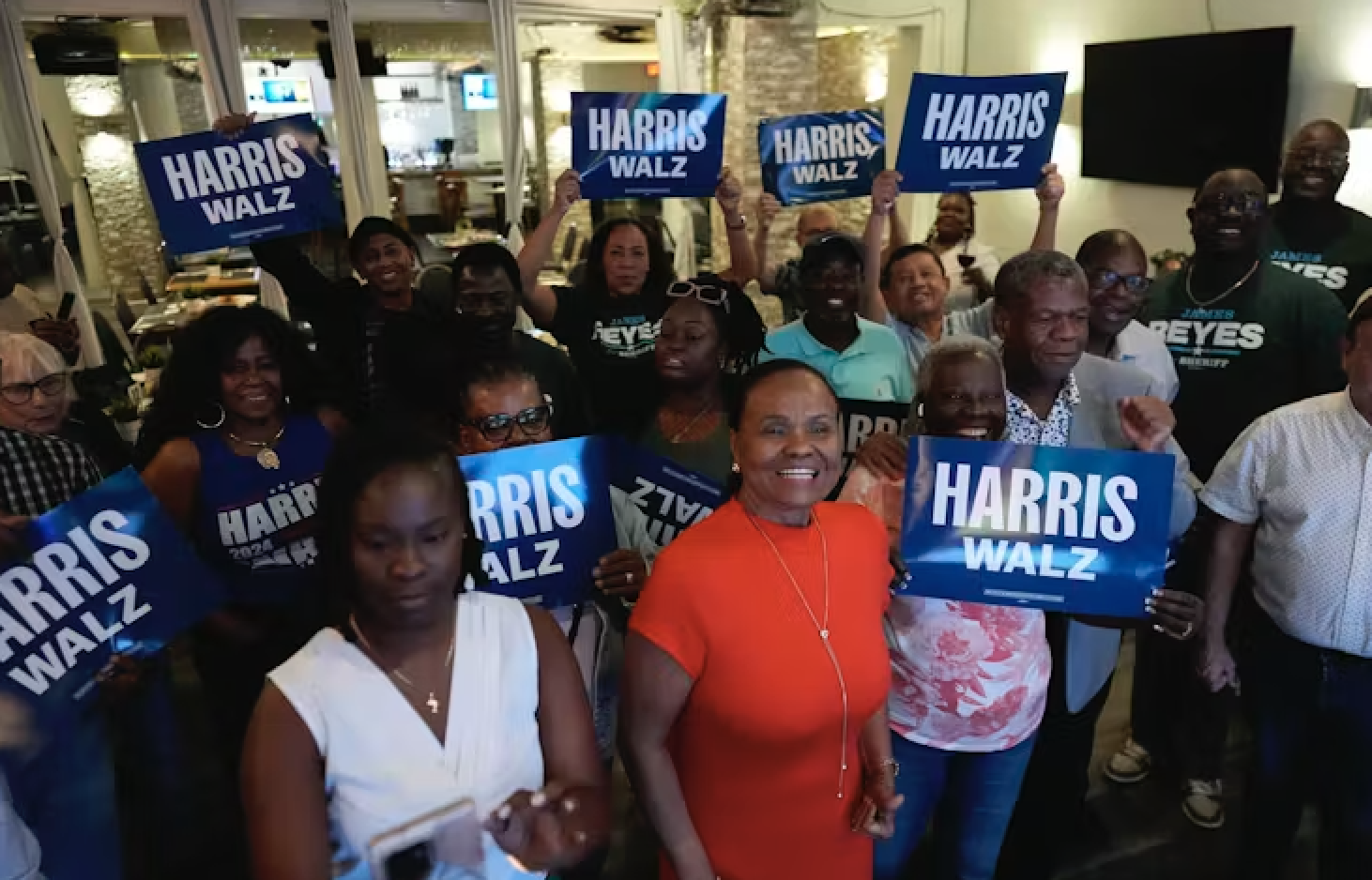
The path to the Democratic Party for African American Protestant and Evangelical voters is not one that is very hard to understand. It is one that stems from the racial tensions of the 20th century. In the mid 1900s there is a clear divergence, the Democratic Party associates with pro-civil rights legislation while the Republican Party embraces southern white opposition to civil right changes. This division has fueled long term partisan identities that are very present today. For African American voters, they had to vote for the Democratic Party because if they didn’t, it meant sacrificing their own personal liberties. While not to the same extent today, there is still a sentiment among African American voters that a vote for the Republican Party is one that will push the needle towards a more racist America.
The second reason behind the Democratic support of African American Protestant voters is more policy driven. The African American church has historically been a community hub, and a place of support. African American Protestants generally support government intervention to help the poor and advocate for social support systems, which they see as aligned with biblical teachings to care for the vulnerable. These positions are generally more in line with the Democratic Party’s policies than the Republican Party’s emphasis on spending cuts and a smaller government model.
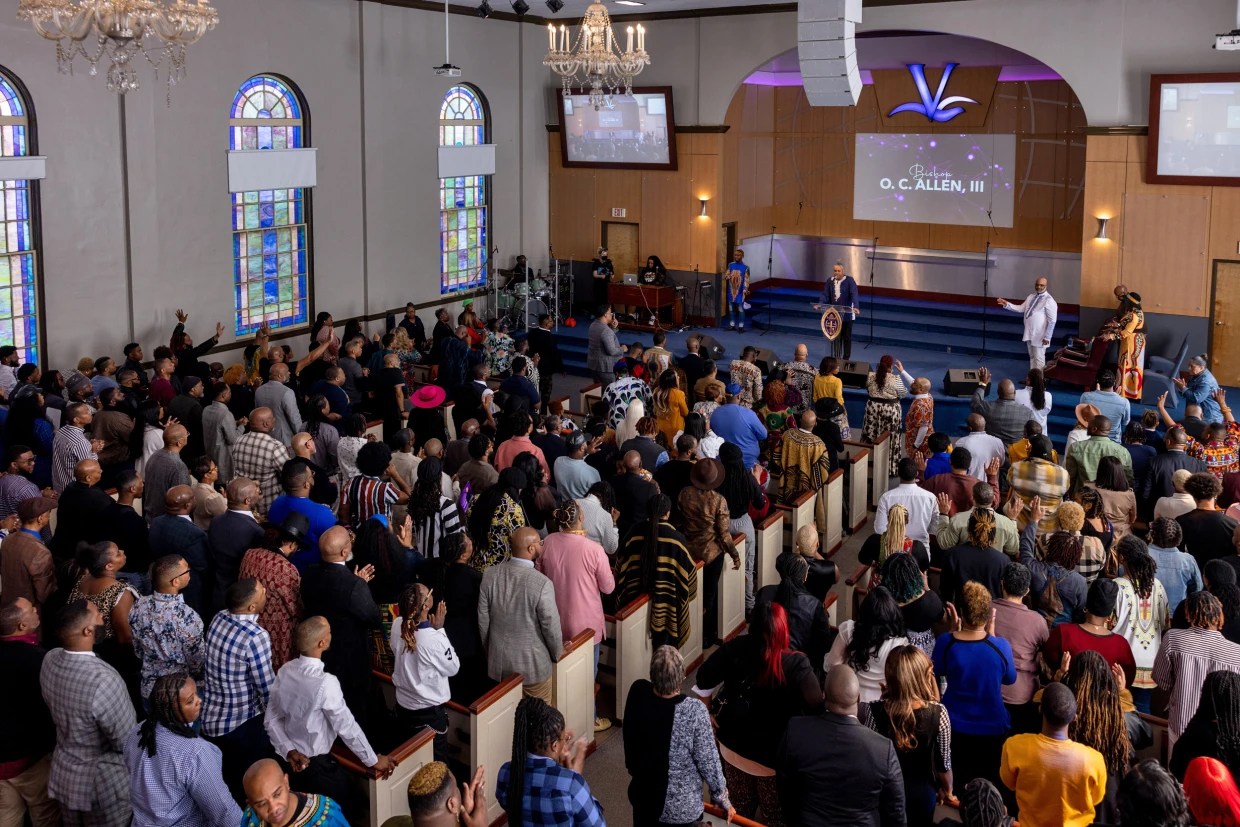
So how can these trends be reversed? It is clear that the leftist alignment of Protestant African American voters is grounded heavily in race and the want for equality, so how do Republicans win those voters over: they convince African American voters that race is not the separator that it used to be by reducing the prominence of race in legislation. For years it seems like Republicans have been dismissive of the idea of systematic racism, instead they must face the issue straight on. The Republican Party needs to demonstrate their reduced racial salience, and emphasize the change their party has gone through. This can be done by establishing clear, consistent support of pro-civil right legislation. Yes, they can still be a party of the more traditional America, but no longer should that traditional narrative be defined by race.
This will require significant change as there are still many issues in which the Republican Party is taking stances which can be perceived as against racial equality. To give an example, the topic of immigration has been extremely debated recently. For many African American voters, the discrimination received by immigrants feels racially driven. There have been many times in which ICE and the Republican led US government have treated people trying to enter the country as inhuman, often referring to them as “illegal aliens.” This language feels racially motivated and reinforces the racist rhetoric that follows the Republican Party. For many voters, this rhetoric carries symbolic weight that extends beyond the policy itself. To change the narrative, the strategy of the Republican Party must change. Instead of dehumanizing illegal immigrants, take a less radical approach and instead show how the weak border security of recent years has hurt America. Not by criticizing those coming into the country but by simply talking about solutions such as strengthening the border without incorporating race.
However, it is crucial that the Republicans can still remain the conservative party that is on the more traditional side. Many African American Protestants are religiously conservative on issues like abortion or sexuality. By decoupling social conservatism from white identity politics and emphasizing themes of family stability, responsibility, and community care, it is possible that a new form of Republican conservatism could emerge that appeals to many African American Protestant voters. White Protestant voters and African American Protestant voters share many of the same religious values which can transform to similar political beliefs. The key difference between the two churches is that the African American church emphasizes collective liberation and frames sin in more structural terms. More than the white church, for many African Americans the church is a survival institution. It has historically been a center for community life as the state excluded African Americans from many services. But that does not take away from the fact that the two groups follow largely the same religious teachings. Yet, because of the perception that the Republican Party is more conservative on race, the White and African American church have become divided on politics. By demonstrating a change in racial values, could it be possible for the massive Protestant and especially Evangelical voting blocks to turn even more in the favor of the Republican Party?
The question that has emerged in my head after writing this article is whether a new form of conservatism can emerge which is compatible with a multiracial voting block. In the 2024 presidential election, around 80% of Donald Trump’s voters were white. Is this sort of separation inevitable, or is the Republican Party open to endorsing more pro-civil rights legislation? Currently, progress on social equality has been driven more consistently by the Democratic Party. What would happen if that pattern changed and it wasn’t only the Democrats leading the charge. There are no guarantees that this would alter the voting decisions of a minority group such as African American Protestants but it may question the voting trends that have held steadfast over the last 50 years.
 The New York Unity Project
Leave a comment