By Wendell Sweet
One of the most important facets of democracy is the separation of church and state. It allows for government and religious institutions to operate independently and protect religious freedom while limiting the impact of religion on government policy and decision making. However, the correlation of religion, specifically Christianity to political alignment, is one that is severely limiting the ability of America to bridge the political divisions it faces.
The south has been named the solid south by Republicans for a reason. Year after year, southern states vote Republican, with the key reason behind that being the fact that for many of those states a significant portion of the electorate is white Protestant. There is no denying the connection between Christianity and conservative beliefs. It seems like no matter how Republicans adjust their policies or beliefs, as long as they are more conservative than Democrats they will maintain Christian, specifically white Evangelical Christian support. Amongst religions, according to a poll by Pew Research, aside from Mormons, the only religion that Republicans have a significant advantage in is the white Protestant voting block. Meanwhile the Democrats have advantages amongst Atheists, Jewish people, and Muslims. In order to bring America towards a more united state, Republicans must bite into that democratic demographic, and Democrats must figure out how to gain more white Christian voters. In this article I want to focus on that specifically, how can Democrats appeal to historically conservative voters who are opposed to liberal democratic policies?
The biggest roadblock for Democrats is how to convince white Evangelical Christian voters to put their own self benefit over their religious ideals. Democrats need to accept that for many of these voters, there is no way to make them budge on their stance on abortion, gun laws, or racial issues. However, what can be done is to change what this massive voter block prioritizes. This concept is commonly called decoupling, and currently, religious identity is heavily tied to a political identity, and over time in order to reduce this issue this connection must become less concrete.
First I want to take you back to the early 21st century – the 2008 economic crisis. The growth of mortgage-backed securities led to a massive collapse of the US housing market followed by an economic failure. When someone buys a house with a mortgage, they promise to pay back the money on their house over time with interest. That lender ends up profiting in the long term. In a mortgage-backed security, investment banks would buy up these mortgages and sell them to investors as safe investments with guaranteed profit. In these mortgage-backed securities, investors would receive the profit lenders would make on their mortgages. Over time interest rates went up, and as more and more people invested in mortgage-backed securities, more high-risk loans were made to unqualified borrowers. Eventually homeowners began to default on expensive mortgages meaning they failed to pay them off. This caused mortgage-backed securities to lose value, leading banks to suffer massive losses and lose trust in one another, eventually causing a stock market crash and a global economic recession. For years after this economic growth slowed, and there was a distrust of economic elites.
Now I want to go over the White Evangelical presidential voting trends of the past 5 years (as of recent Pew/PRRI data).
- 2020: 76% Republican
- 2016: 80% Republican
- 2012: 78% Republican
- 2008: 73% Republican
- 2004: 78% Republican
The 5 percent drop in White Evangelical Republican support in 2008 is very noticeable considering that they make up around 13 percent of the American population amounting to 78 million people. While there are many other factors that could’ve affected this drop, it is likely that the economic collapse of America made some of these voters put their economic wellbeing over some of their Christian values. In the 2008 election, Democrat Barack Obama ran against Republican John McCain. Leading up to this election, the Republicans had unified control of government under the Bush administration and therefore were associated with the economic crash. Then when it came to actual policy, the two candidates had contrasting ideas. John McCain – a strong capitalist – believed like many Republicans that the free market would eventually even itself out. On the other side, Obama proposed more government intervention. He saw the government as a stabilizer, wanting to use bailouts, stimulus, and unemployment support. For many voters, the Obama plan seemed like one that was more trustworthy of providing economic stability. Continuing to trust the free market plans of the Republicans was a risk.
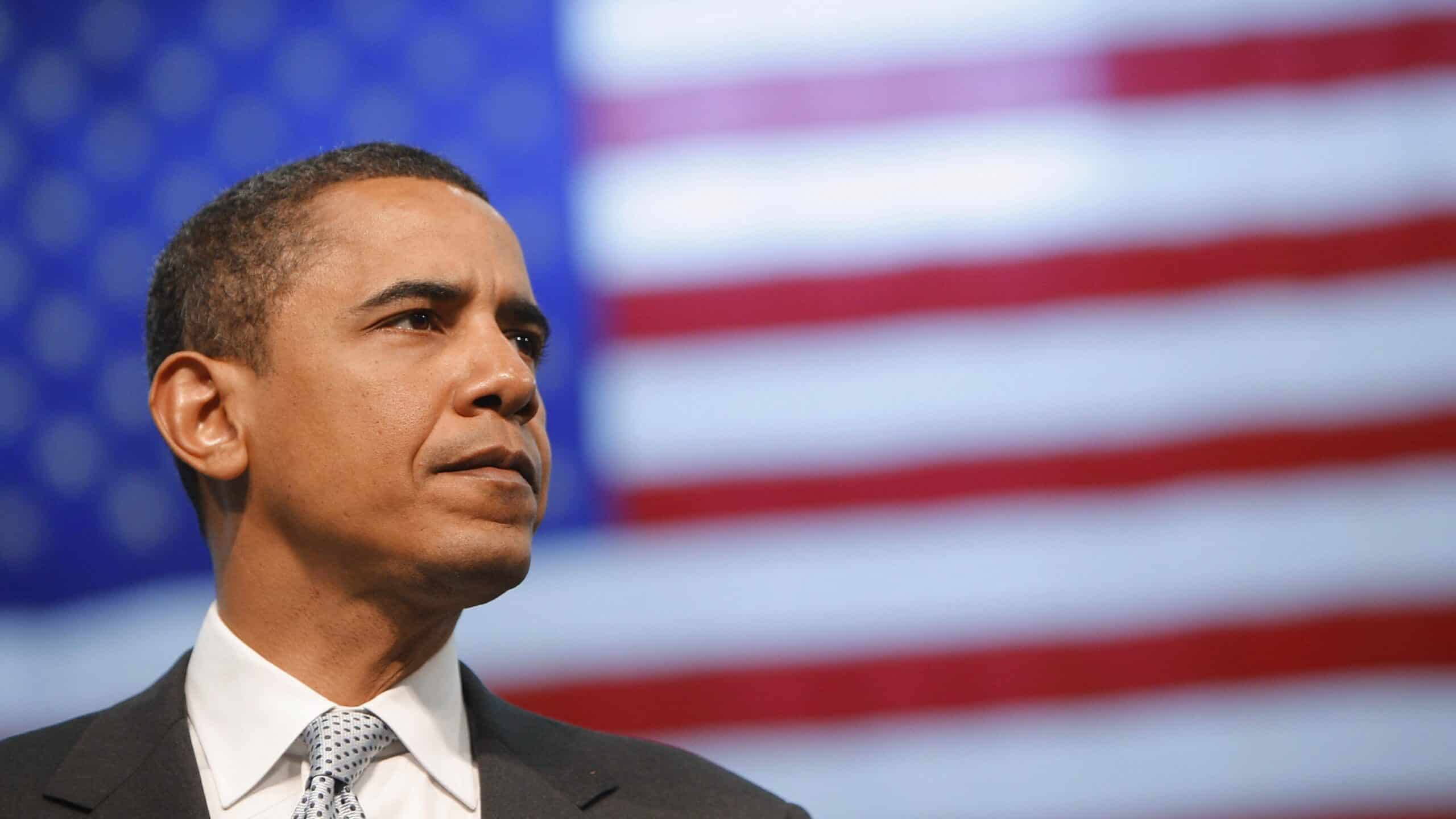
This is what allowed Obama to make gains in the white Evangelical demographic. For some of these people, they were forced to put their own economic benefit over their religious beliefs. Even if they might have had ideological disagreements with Obama, they decided to put those aside and do what was best for them at that moment. Yes, Obama still lost the White Evangelical voting sect by a large amount, and as long as the Democratic Party has clear disagreements with these voters over issues such as abortion, it will be impossible for them to win this voter portion. However, what is possible is to replicate what happened in 2008. At the very least, it will make these voters question if the Republican plan is one that will truly benefit them. Rather than attempting to change deeply held moral beliefs, Democrats should shift the salience of political debate toward shared economic concerns.
There is one distinction I would like to highlight. While the connection between the Republican Party and white Evangelical voters is clear, the idea that christian values align with Republican policy is an idea that can be changed and has been changed. A key message among Christians is a strong call to love God and love their neighbors as themselves. From solely a policy perspective, those Christian values support the Democratic style of governance. Democrats provide more support for the lower classes as a result of their expanded government system. Republicans tend to encourage independence while Democrats offer a support system for those who struggle. Many Christian teachings emphasize charity and communal responsibility which can be framed in ways that align with Democratic economic policy. But, it is understandable why the Republican way of conserving traditional values draws so many white Christians to their side. For many lifelong Christian voters, supporting a party that is pro-abortion can be challenging. But the point is that a debate can be had, and should be. The link between white Evangelical Christians and Republicanism is not as clear cut as it seems, in fact in the early 1900s, Democrats were associated with Evangelical Christians. At that time Democrats were the more conservative party, but it was still a momentous accomplishment that they were able to identify with Evangelical values without entirely altering their party’s goals.
If you go back to the first half of the 20th century, white Evangelical Christianity in the U.S. was characterized by community-oriented ethics with churches as central social institutions and an emphasis on charity, mutual aid, and local responsibility. This aligned with the democratic model of supporting and representing the working class. But post WW2, the religious right rose in influence, and at the same time the Democratic party began to embrace more liberal values. The post-war era saw the rise of new cultural movements (e.g., the counterculture of the 1960s) that challenged traditional Christian teachings on sex, gender, and family. The election of Ronald Reagan in 1980 was a turning point, as he embraced evangelical Christians. Issues like abortion, school prayer, and opposition to LGBTQ+ rights became central to Christian political activism. There was a renewed emphasis on a return to traditional, family structures and sexual morality.

Now in the last 20 years, the introduction of social media has only made these views more extreme. While without a doubt there is a liberal wing of Christianity that exists, the left and right have only doubled down on their values. This has widened the religious divide and made the religious right unreachable to the Democrats, while the religious left is unreachable for the right. Yet there was a time when white Evangelical Christians were less set on issues such as abortion and LGBTQ+ rights. In order to bring this voting block more towards the middle, these issues can still be prioritized, but they need to be considered on the same level as economic and moral values. This will bring back the moderate Evangelical voter who doesn’t vote in an election solely based abortion. In order for this change to happen however it is key that Democrats increase physical investment in communities that feel economically neglected. Many white Evangelical voters feel abandoned, and with proper investment, the benefits of the Democratic economic framework can be made clear.
The key is that Democrats rebrand their message. Instead of being the party for the intellectual elite, they need to get back to that message that allowed them to carry many southern working class voters. There is a sentiment among many that instead of proposing solutions to problems, Democrats are instead telling people that they have an incorrect approach to many topics. Once Democrats can frame themselves as truly being the party for the working class like they were founded to be, only then will the divide between them and the white Evangelical Christian block be bridged.
 The New York Unity Project
Leave a comment